Wednesday, June 15, 2016

Kavinaka May 20

        
The view from the window of the truck cab
The beautiful scenery and people along the way to Kavinaka make up for the long and bumpy ride. 
We arrived to find our teachers and students ready and waiting for us.  I began with Mr. Francis Zimba while Mabuchi modeled for the grade one and two teacher who was unable to observe the model lesson last week. Mabuchi commented to me later that the students did not know how to hold a pencil and had little to no experience with school. Much work is still needed here.
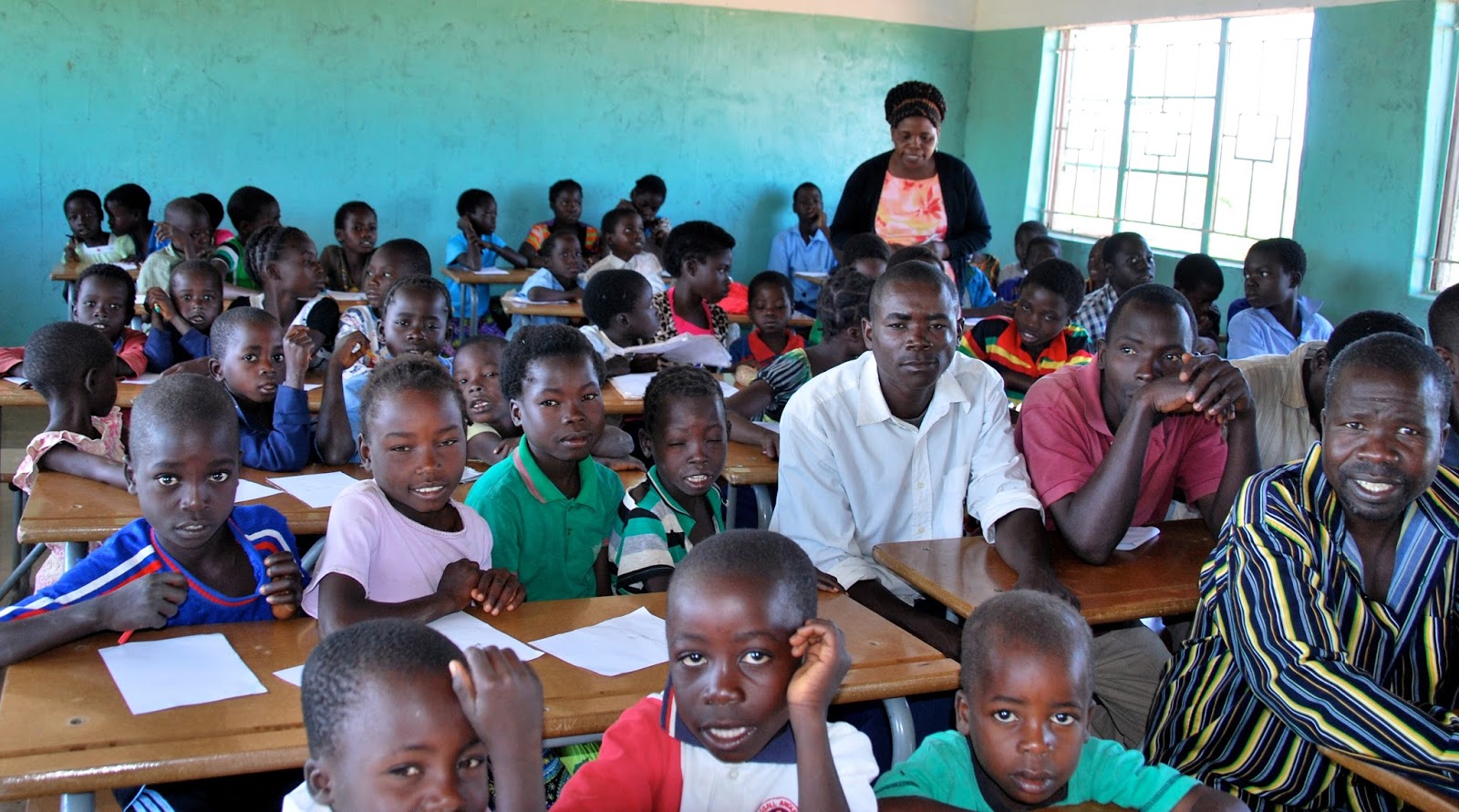
Students are seated in groups with name tags - but no furniture

Mr. Zimba works hard to make sure the girls are included
Mr. Zimba however, impressed me with his instructional strategies and skill.  He taught the entire lesson in English with only a few sentences in Tumbuka for clarification about conductors and insulators.  He engaged every learner and used a variety of strategies including examples from real life.  Mabuchi was able to sit in on the end of the lesson observation. He has one of the highest grade 7 passing rates in the area.
Mr. Zgambo teaches about photosynthesis
We observed grade six teacher, Mr. Zgambo, together.  He had many good pieces in place and with further training, coaching, and practice he can be a fine teacher.
Boys take notes after some discussion
Getting input from the teachers during the debrief
Mabuchi met with the teachers to debrief about the lesson, further training they require, and income generating ideas they have to support the needs of the school.  
Posing with the teachers and PTA chairman


Voter registration continues here in this village too!
We drove back to Lundazi, picking up and dropping off several people along the way.  At one point we had 7 people in the truck and two chickens in the back.  When we arrived in Lundazi we met the Johnsons and drove to the game park for the weekend.   It is Mabuchi's first time to see the animals and visit the park.
I love the contrasts between past and present - ox cart and motorbike

Sunday, June 12, 2016

Teacher Observations Begin – May 18 & 19


Grade level in Zambia is not determined by age. Students generally start first grade at age six  but grade one can include any beginning student regardless of age.  This is why when viewing the photos in this blog you might see older students even adolescents sitting in primary grades. Some students must work in the fields or care for a sick relative instead of attending school and then start back at school wherever they left off.  Mabuchi and I try to encourage older students to persevere.
 
Mr. Mtonga and Mabuchi reflect on the lesson
For this portion of the project Mabuchi and I will observe as many teachers as possible and provide positive feedback as well as suggestions but only if teachers want them.  Mabuchi will be observing in classes where Tumbuka is the primary language of instruction.  I will be observing in classes where English is the primary language of instruction.

Today we returned to Kaponga and Mazulouwa.  We met with the teachers at Kaponga and asked each one what the children would be learning or the objective of the lesson.
Teachers of Kaponga
 The head teacher, a government teacher, seemed unsure of what he was going to teach so we gave him a minute to look through his books to determine his lesson objective which he still had difficulty articulating.   A new volunteer with no training told me he was teaching “the sky.”  After asking many questions I was still unsure exactly what he was teaching but during the observation realized the story in the book was called “The Sky” about a girl who sees a bright star in the sky and her grandfather tells her it is not a star but a planet called Venus.  He, like so many other teachers, teach like they were taught, reading the story and then writing the fill in the blank questions on the board without understanding what the students should learn by the lesson. He later told me his grade 5 and 6 students cannot read in any language, especially English.  After observing and providing feedback Mabuchi and I decided there is still much work to be done here.
Mabuchi speaks to the girls while the boys look on

Mabuchi never misses an opportunity to encourage the girls to stay in school and avoid "early marriage."  In this culture the boy or man's family must pay a bride price before marriage.  Many families with girls view this as a way to make money.  Sometimes young girls are "sold" to older men with other wives.  

We arrived at Mazulouwa after a relatively short drive where we met our two volunteer teachers.  Both have had some training from me.  After some questioning and paraphrasing the teachers were able to articulate an objective for their lessons. 
Mr. Nyirenda provides additional support to those who need it
Mr. Nyirenda taught a math lesson from the book on multiple digit subtraction. Although he uses only Zambian methods to teach the content, he utilized many engagement strategies to make sure the students understood. 

Some of the grade one students
Mrs. Nkhoma taught parts of the body including head, arms, legs, ears, eyes, mouth, and nose.  Mr. Nyirenda had a meeting to attend and usually teaches the grade ones at this time so Mrs. Nkhoma taught all the grade ones, twos, and threes – over 60 students.  We observed she had many pieces of instruction in place and with some additional practice and coaching could be an excellent teacher. Mabuchi and I left Mazulouwa pleased with the teachers’ abilities.
Some students are a bit distracted by the white woman in the back of class
Students predict the number of squares in various grids
The following day we traveled back to the village of Lovi.  Mr. Mtonga was the only teacher present.  The government teacher has not been present at school since we visited over a week ago.  Mr Mtonga taught a math lesson on grids which was planned and included ways to engage the students.  He started out strong but required some assistance part way through. 
These girls show me a 3X3 grid has nine squares
I ended up giving more him some support by taking the students outside and showing them some strategies using rocks and drawing in the dirt.


The head teacher's enthusiasm engages the students in the story
Our final stop for the day was at Matipa.  The two government teachers were well prepared and well-planned.  Mabuchi and I were pleased with the progress they have made.  The head teacher seems committed to help the volunteer teachers improve their instruction.  The volunteer teachers were not present because they were attending a funeral.
I will leave you with this photo of a typical afternoon sky we see as we drive through the countryside.   Mabuchi teases me for me frequent comments about how beautiful the clouds are or how blue the sky looks.  These are things my Zambian friends do not notice.


Friday, June 3, 2016

Wrapping Up Demonstration Lessons – May 16 & 17

Enjoying the peaceful scenery of the countryside
After a restful weekend we were on the road again winding down narrow dirt pathways lined with trees, long grass, ripe cotton, and dried maize stalks - ending in the village of Donje.  
Students draw a sunflower
Mabuchi modeled two lessons - one with the grade three and fours and one with the five, six and sevens.  Two of the five teachers attended trainings in the past.  One in particular was familiar with many of the strategies demonstrated by Mabuchi.
Students compare answers before sharing with the class

Students agree on an answer before raising their hands
All teachers appeared to see the power of the engagement strategies Mabuchi modeled.  Again, the lessons were mostly taught in Tumbuka since the children understand and speak very little English. 
 
Mabuchi uses a piece of wood for a chalk board
The teachers of Donje

MOLOZI


 Mr. Mkondawire, Mr. Lungu and Mabuchi show students a flowering plant
Today our school visits included two schools – Molozi and Mtelwe.  This was my fifth visit to Molozi. I was pleased to see Mr. Lungu has returned to the classroom.   When we visited in October he was discouraged and had stopped teaching. He is pleased to be back with the children.
Mabuchi taught all fifty students who showed up for school in the morning  in grades three through six.  The lesson about parts of a plant was well received. Again, English is not spoken much at all so most of the lesson was in Tumbuka.  When teaching Mabuchi tried to use as much English as possible using many English Language Learner techniques.  The two volunteer teachers commented that they found the demonstration helpful and look forward to our return.
Police, government officials and volunteers help with registration in Zambia
The next couple weeks is voter registration time in Zambia.  Like the US, schools are often official polling places where people come to register as well as vote. Registration under a tree outside the school is common in most villages.

Our next stop was Mtelwe.  As we pulled up I noticed many in the villagers running away.  One child was screaming with fear when he saw me.  Apparently the white face and hair is not unlike a boogie man or ghost in their culture. Also, the last whites to visit the village spoke to the people about circumcision…

Children indicate they are ready to answer the question
All three volunteer teachers were present including Mr. Banda, the head teacher, who has attended one training back in 2013.  Although we have several lessons in our repertoire our lesson about parts of the plant (a Zambian requirement all children should know) is used most frequently because all children in rural Zambia have background knowledge about flowering plants.  The basic lesson includes drawing, labeling, and being able to tell the English names of the plant (flower, stem, leaf, and roots). Often we include some drama and movement to help as well.
Students demonstrate flower, leaves, stem and roots
If the students appear to have mastered this we move on to understanding the purpose of each part.  We leave the entire lesson with the teachers that also includes all the parts of just the flower and their purposes. 
There were only twelve students present in grade three and four today making it easier to make the lesson understandable.  Mabuchi utilized many strategies to help the students learn the English words for the four parts of the plant.
Two of the teachers observe the lesson
After some reflection with the teachers we were back in the truck.  We dropped two of the teachers off several kilometers from the school- a path they normally walk each day and then continue many more kilometers on foot - before continuing our trip home.  I'm continually amazed at the dedication of so many of our volunteer teachers who have a long journey on foot just to get to school.
The head teacher and other volunteer say goodbye as they continue on their way home


Sunday, May 22, 2016

Chaphanji, Chimosa, and Kavinaka – May 12 & 13

Mabuchi and Mr. Luka Zimba model "think, pair, share"
After a two-hour drive along rough and and rutted roads  we arrived in the village of Chaphanji. Most of the people speak little to no English but were interested in seeing a white woman and seeing the lesson, so adults and children, even babies, joined us. The teachers report that children often do not attend school, or at least not regularly. Although the classroom was packed with students almost none had paper or pencil.  Mabuchi and I quickly found some pencils in our materials, broke them in half and started sharpening.  
Adults and children of all ages joined the lesson.
After digging around in the closet, the teachers found some paper and we were set to go outside and draw a flowering plant.    It was obvious that many of the children had little or no experience drawing. After an excellent effort by Mabuchi, the basic objective of the lesson was met, the children dismissed, and we discussed what the teachers observed.  Mr. Luka Zimba was quick to make insightful comments about the lesson.  His partner commented that he learned a lot.  Both expressed willingness to practice some strategies they observed.
 
Mabuchi with her middle school friend
After taking a few photos including this one above of a classmate of Mabuchi’s from middle school, we jumped back in the truck and drove an hour and a half back down the dusty path to Chimosa.  Along the way Mabuchi happened to see her niece on the road who was visiting relatives in a nearby village.  I tease Mabuchi regularly that she knows everyone.
Mabuchi with her niece

Teachers observe as Mabuchi demonstrates and students draw a plant
Next stop: Chimosa!  A government teacher has joined volunteer teachers - Mr. and Mrs. Niyrenda. The government teacher is from a village in the area so he understands the language and culture well.  Mabuchi taught the grade threes about parts of a plant.  The students were prepared with their books and pencils and drawing a plant came easily to them. The children caught on quickly and Mabuchi got past the mere drawing and labeling part of the lesson and led a discussion about the purpose of each part. 


During the discussion with the teachers following the lesson, the government teacher seemed pleased and eager to try some of the strategies demonstrated by Mabuchi.  Mr. Niyrenda already uses some of the strategies but saw the need to use them more regularly.  After presenting the school with chalk and “dusters” as we do at each school, we returned to Lundazi.
Mabuchi presents chalk and dusters to the head teacher
Mabuchi and I pose with the teachers
Students turn and talk to determine the problem in the story
The following day we journeyed another hour and a half to the village of Kavinaka.  The teachers were prepared for our arrival including having name tags for the children.  The school building is new but the furniture is not yet available so students must sit on the floor.


Using real plants as a model for the "Part of a Plant" lesson

Mabuchi taught two lessons –
Students using "think, pair, share"
one for the younger grades and one for the older. The students responded well and contributed to the discussion. 
The two teachers appreciated the lessons and will be ready to demonstrate for us when we return next Friday.
Teacher, Mr. Francis Zimba and his family


Tuesday, May 17, 2016

Kaponga and Mazulouwa, Lovi and Matipa – May 10 & 11


Roadway to the village
The rainy season makes way for the cool dry season in Zambia.  The mornings require a jacket but the afternoon sun forces the jackets to come off.  Mabuchi and our driver, Moffat, project manager for CCAP Education Department, point out villages, schools, and friends they know along the way.  We zigzag down dusty roads flanked by tall grass crossing back and forth between Malawi and Zambia.
Mabuchi models a lesson while teachers look on

Our first stop is Kaponga – a school I have visited four times before.  Only a handful of children show up for school today but we teach the lesson anyway.  The school has two volunteer teachers and two government teachers.  The one government teacher has been there several years and is mentoring the two volunteer teachers.  Even though he has had some training from me in the past he reports he has learned some new things after observing Mabuchi’s lesson.  The teachers all contribute to the discussion.
The head teacher is thrilled to receive chalk and "dusters" for the school

We arrive at the village of Mazulouwa.  The two teachers present have received training from me in the past.  Mabuchi takes the lead on this lesson about parts of a flower, requiring the students to go outside and draw a flowering plant.  
Word spreads quickly that a white woman is in the village and when we return to the classroom a few curious visitors drop by and join us.  
The teachers admit they need to return to using some of the engagement strategies they have observed in the lesson. 


Mabuchi on the cement bridge
The next day we drive to Lovi, another village I have visited several times before.  In the past we have had to reach the village by crossing a log on a stream.  Last year the community put in a cement bridge making it possible for vehicles to cross the stream.  One of my beloved teachers, Mr. Mtonga his partner, a government teacher work well together. Mabuchi tries a new lesson about odd and even numbers which goes much better for her than it did for me in Lusaka in February.  Both teachers appear to work well together and contribute many insights about the lesson.
Reflecting on the lesson

Our final stop is Matipa.  The grade six and sevens are present and Mabuchi teaches the lesson on story elements.  She conducts much of it in Tumbuka but teaches several new vocabulary words and concepts in English.  
Students turn and talk to determine the story elements
She uses the story of the Tortoise and Hare to teach character, setting, problem and solution.  She reads the story in English while I act out some of the parts.  The school has two government teachers and one volunteer.  Again the teachers indicate they see the power of the strategies used and are willing to try them out in the coming days.

Some children get a ride to school in the truck (we made them sit down once we started moving)